Laity Sunday: Finding our Inner Super Hero

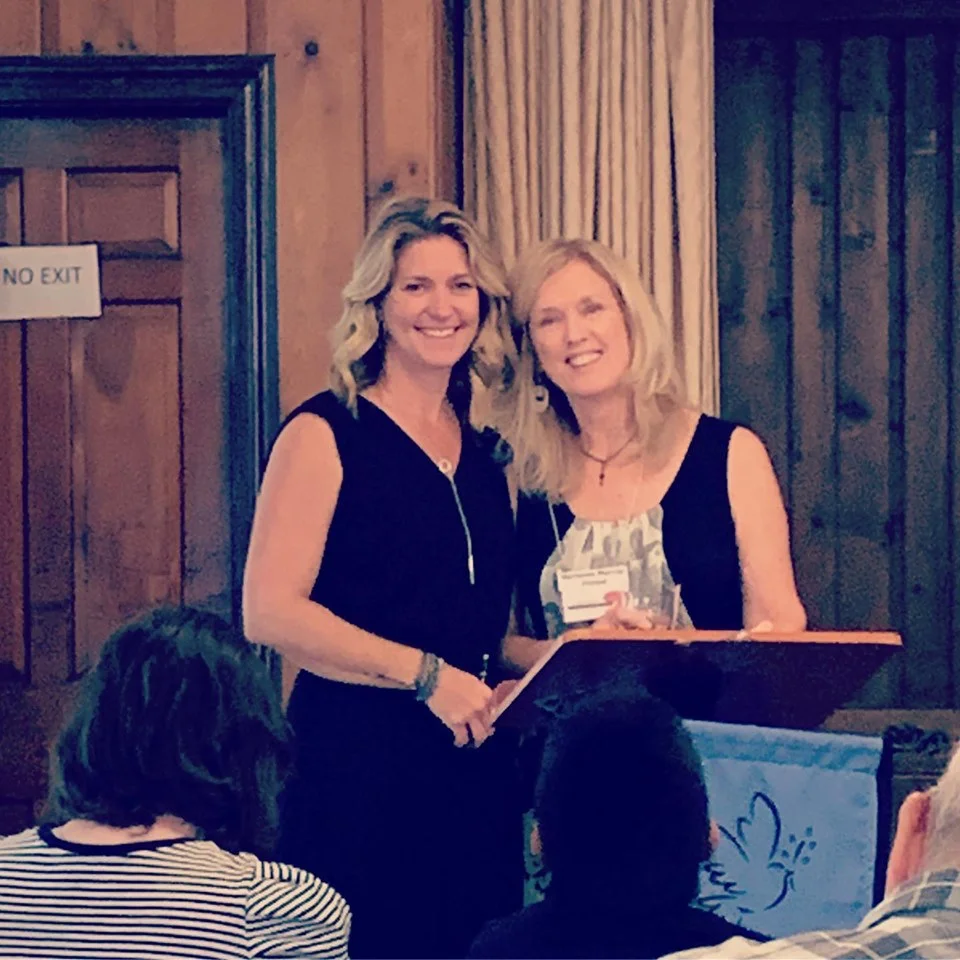
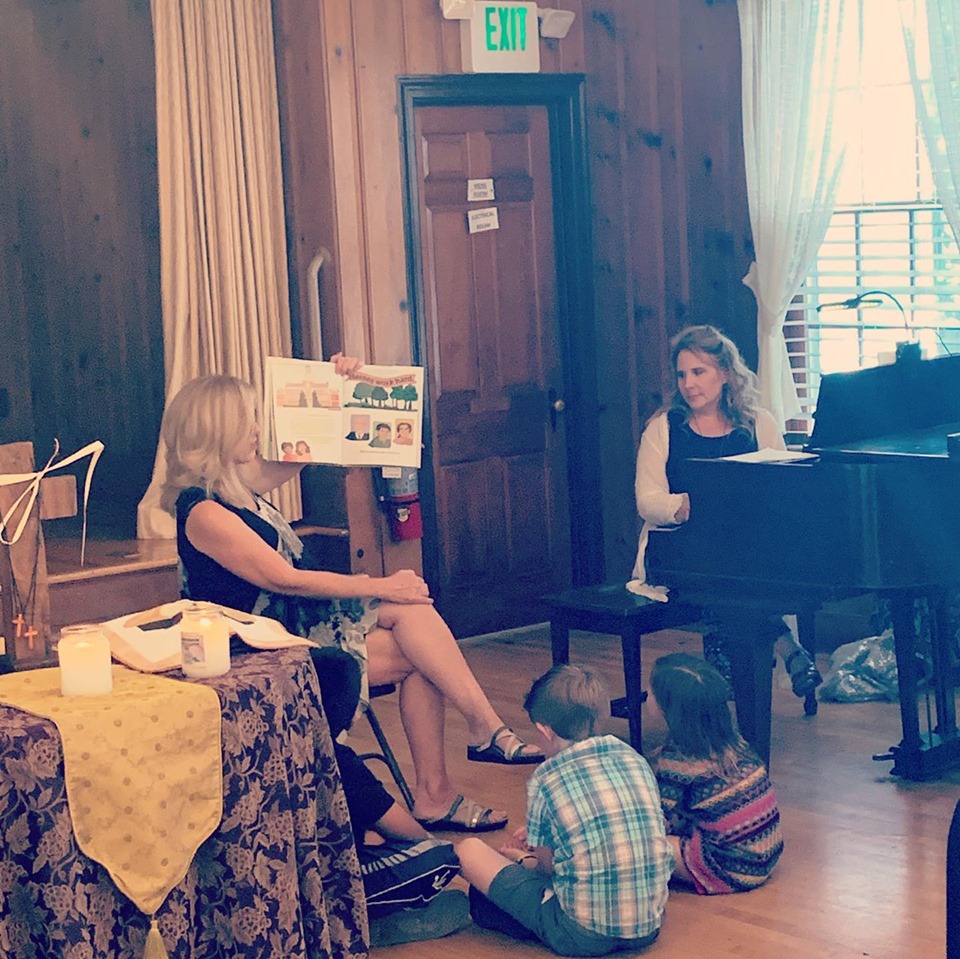
My church is a sanctuary. Not in the sublime definition of sanctuary where we visualize zen music and serene landscapes but that of safety and refuge. We are an open and affirming church who truly invites the lost and lonely to be folded in our Grace. Today, I led the service and built up to my superhero - my mom - providing the sermon. We are called to live in kindness and love, and I see this group of diverse and wildly awesome humans come together to do many small things in hopes of changing the world. I am so proud of my congregation. I am so proud of my mom. I am so hopeful for the world we can still recreate for my kids and yours. God calls us to be our best selves and shine our loving light wastefully. Today, I feel we answered that call.

Michaela Healy Birdyshaw

"How to Be an Anti-Racist," by Ibram X. Kendi

Editor’s note: At this time we do not have a week three recap for you from the interfaith book group, as our usual correspondent is out of town. Instead, we have a recommendation for additional reading material.

This note is a follow up to our discussion this past Wednesday. During that discussion, I delivered a message from my wife Vassie. Her perspective was everyone in our group would agree that racism is not good. Her analogy was all of us would similarly agree that slavery is not good… none of us would ever have slaves. But in American history, while there were many people who believed slavery was not good, there were not very many people who were true abolitionist. She defined an abolitionist as someone who not only did not own slaves, but someone who was also willing to take actions to abolish slavery from the American system. So Vassie’s suggestion was that our discussion might be better served if we moved away from trying to decide whether we individually were racist and eventually moved toward a discussion of how might we abolish racism. None of us wants systematic racism. But are we willing to work to change that system… to be an Antiracist?

 Vassie said there is a good book about all of this, titled How to be an Antiracist. I’ve not read it. So I can’t recommend it. But I’ve purchased it on Audible and I am currently listening to it (It’s about 10 hours long). Under Audible, you are allowed to give any friend a free book if they’ve never accepted a free Audible book from some other friend. So each of you can download the book for free if you’ve not accepted a free book under Audible in the past.

 If you prefer to read a physical book, or like to do your reading on Kindle, you can purchase a copy through Amazon Smile.

— Bill Taylor

"So You Want to Talk About Race" - Week 2 Recap

Dear brothers and sisters,
(it just occurred to me how like the disciple Paul, that sounds; then you have to know that my middle name IS Paul!)
Here is the Week 2 installment of my notes on our discussion.
It’s worth noting for Kelly that there have been two supplements to the discussion:
(1) An article on slavery in the Quaker world sent out by Karen on Monday:
(2) An article the Joey Novick found regarding White Supremacy in Hunterdon County
Here is my very superficial synopsis of today’s discussion: as before, the addition of your views and any other highlights that were of significance to you are welcome.

So You Want to Talk About Race, Week Two: September 18

The group (18 people with two new attendees) gathered at the Flemington Jewish Community Center with Ms Karen Buys leading.

We started by reviewing population statistics.

RaceStatistics.png

[I am including here numbers not presented that I obtained from Wikipedia’s citation of the 2010 U.S. Census.

Karen asked us three key questions; as one might imagine there were many comments, views, opinions, and thoughts expressed.

1.     How often do you think about the color of your skin?

2.     How do you think race relations are now compared to in the past (like three years ago)? Better? Worse? The same?

3.     What are we (the white people in the class) doing with our privilege?

There was a discussion of when is a response a deflection of criticism and when can it be an opportunity to express empathy.

Some discussion centered on the Biblical story of Moses, the Hebrews, and the Egyptians. [Parenthetical note: there are no white people in the Bible.] Thinking of ourselves as Egyptians, how do we escape “the oppressor class?” The hard question was, “Can White people (in particular, White Men) change?” Saying “This isn’t us” is not enough. What actions can be taken to transform the system into one of abundance for all?

However, perhaps what is needed before action is contemplated is to immerse ourselves in what is truly “cringeworthy” in the system.

It appears that one ongoing result of our discussions will be the interaction between becoming aware and becoming uncomfortable; and that is a two-way street.

Awareness <—> Discomfort

Peace,

Duncan Taylor

Week 2 addition: Karen distributed (and I only read it later), the following (long) article on “Slavery in the Quaker World”:

https://www.friendsjournal.org/slavery-in-the-quaker-world/?fbclid=IwAR2x5k71I6BCvsLx5Idhp9imoPBQAzFE0zITqD6aBtBfeynI7110V0u6ejg

She particularly highlighted the sections, "Rethinking the History of Slavery, Race, and Abolition,” "Protestant Supremacy,” and "From Protestant Supremacy to White Supremacy.”

"So You Want to Talk About Race" Book Group Reading Schedule

Reading Schedule

September 18

(Location: FJCC Library) Introduction, Chapter 1

September 25

(Location: FPC, Parish House) Ch. 2/3

October 2

(Location: FJCC) Ch 4/5

October 9

No meeting for Yom Kippur

October 16

(Location: FPC) Ch 6/7

October 23

(Location: FJCC) Ch 8/9

October 30

(Location: FPC) Ch 10/11

November 6

(Location: FJCC )Ch 12/13

November 13

(Location: FPC) Ch 14/15

November 20

(Location: FJCC) Ch 16/17

Supplementary resources

(All of these are available through the Hunterdon County Library)

The New Jim Crow, Michelle Alexander

The Immortal Life of Henrietta Lacks, Rebecca Skloot

Invisible Man, Ralph Baldwin

Between the World and Me, Te-Nehisi Coates

Slavery by Another Name, Douglas Blackmon

The Color of Law, Richard Rothstein

White Fragility, Robin DiAngelo

Born a Crime, Trevor Noah (parental warning: explicit lyrics!)